
Quartz vs granite countertops is one of the first debates homeowners face when planning a new kitchen or bathroom. Both surfaces look beautiful, both last for decades, and both add real value to a home. Yet they behave very differently once you start cooking, cleaning, and living on them every day. If you have been browsing the latest kitchen design trends, you have probably noticed that stone surfaces sit at the center of almost every modern layout. This guide breaks down how each material performs so you can pick the one that fits your home, your budget, and your daily routine.
What Are Quartz Countertops?
Quartz countertops are engineered surfaces. Manufacturers blend roughly 90 to 93 percent ground natural quartz with resins and pigments, then press the mix into large slabs. The result is a dense, nonporous stone that looks consistent from one end of the slab to the other.
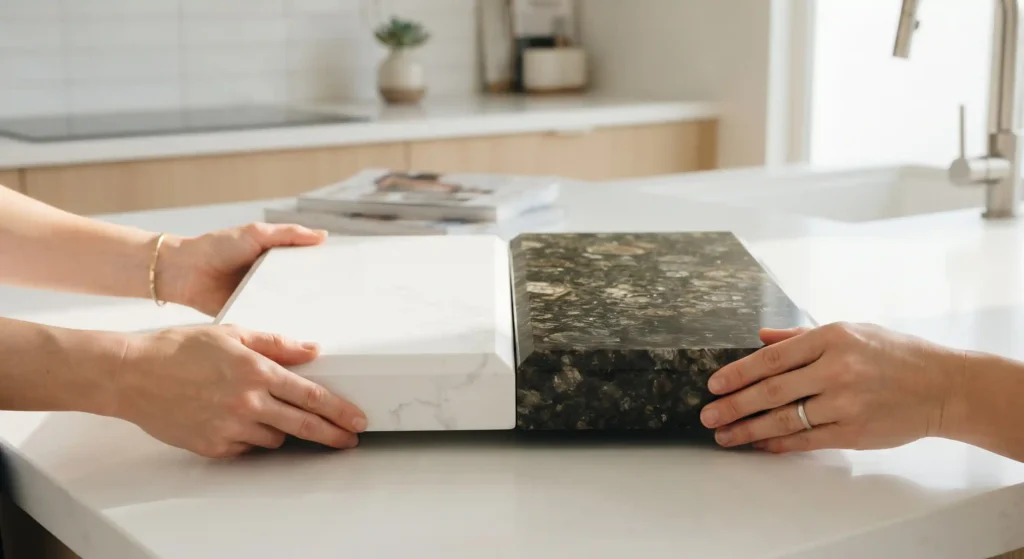
Because quartz is made in a factory, designers can control the color and pattern. You can find solid whites, soft grays, warm neutrals, and convincing marble looks with flowing veins. Many homeowners like quartz because it feels predictable. The sample you approve in the showroom looks a lot like the slab that arrives at your home.
What Are Granite Countertops?
Granite is a natural igneous rock cut from the earth in large blocks, then sliced and polished into slabs. It forms from cooled magma over millions of years, which gives every slab its own mix of minerals, flecks, and movement.
No two granite slabs are exactly alike. Some show bold swirls of gold and burgundy, while others are calm and nearly solid. For homeowners who want a one of a kind surface with natural character, granite is hard to beat. The tradeoff is that you need to see and select your actual slab, since small samples can only give you a general idea of the final look.
Quartz vs Granite Countertops at a Glance
Here is a quick side by side summary before we dig into the details.
| Feature | Quartz | Granite |
|---|---|---|
| Material | Engineered from crushed quartz and resin | 100 percent natural stone |
| Look | Consistent color and pattern | Unique natural variation |
| Sealing | Never needs sealing | Needs periodic sealing |
| Stain resistance | Excellent, fully nonporous | Good when properly sealed |
| Heat tolerance | Moderate, always use trivets | High |
| Sun and outdoor use | Can fade or yellow in direct UV | Handles sun well |
| Maintenance | Very low | Low to moderate |
Durability and Everyday Wear
Both materials are tough enough for a busy family kitchen. Quartz rates around 7 on the Mohs hardness scale, which puts it among the hardest countertop options available. Its resin binder also adds a little flexibility, so it resists chips and cracks well, even along edges and corners.
Granite is also very hard, although its hardness varies with the minerals in each slab. Most kitchen grade granite handles knives, pots, and daily traffic with ease. Because it is a natural stone, some slabs have tiny fissures or softer spots that can chip if a heavy pan hits an edge. When you compare quartz vs granite countertops for durability, quartz wins slightly on consistency, while granite remains a long lasting choice when you pick a quality slab from a trusted supplier.
Heat Resistance
This is where granite pulls ahead. Granite formed under intense heat deep in the earth, so it can handle a hot pot pulled straight from the stove without much worry. That said, using trivets is still a smart habit to protect the finish and the sealer.
Quartz is a different story. The resins that make it nonporous can scorch or discolor when exposed to high, direct heat. Most manufacturers recommend keeping anything hotter than about 300 degrees Fahrenheit off the surface. If you cook often and like setting pans down fast, plan on keeping hot pads close by or consider granite near the range.
Stains, Sealing, and Maintenance
On the maintenance side of the quartz vs granite countertops comparison, quartz is the clear winner. Its nonporous surface blocks wine, coffee, oil, and lemon juice from soaking in, and it never needs sealing. Warm water, mild soap, and a soft cloth are all you need for daily cleaning.
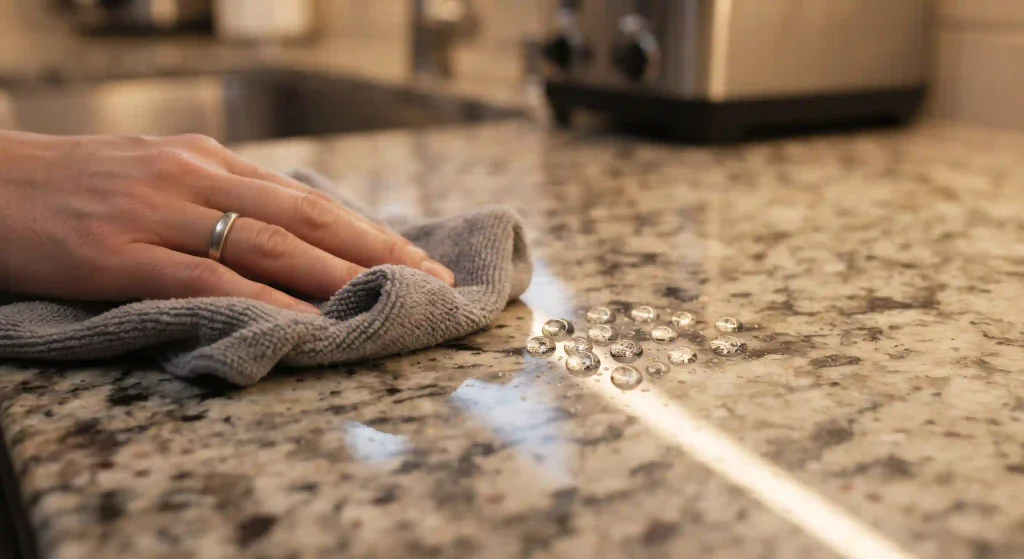
Granite is porous to some degree, which means liquids can seep in if the surface is not protected. A good sealer solves most of this. Many installers suggest resealing every one to three years, depending on the stone and how heavily you use your kitchen. A simple water test tells you when it is time. If water beads up, the seal is working. If it darkens the stone, reseal soon. Avoid harsh cleaners like vinegar or bleach on granite, since they can wear down the sealer over time.
Looks and Design Flexibility
Style often decides the quartz vs granite countertops debate more than any spec sheet. Quartz offers a clean, uniform look that suits modern, transitional, and minimalist kitchens. It is also the top choice if you love the look of marble but want something far more forgiving.
Granite brings depth and movement that only nature can create. It pairs beautifully with warm wood cabinets, rustic finishes, and the traditional and Spanish style homes common across the San Fernando Valley and the Conejo Valley. If your space calls for a statement island, a dramatic granite slab can become the focal point of the entire room.
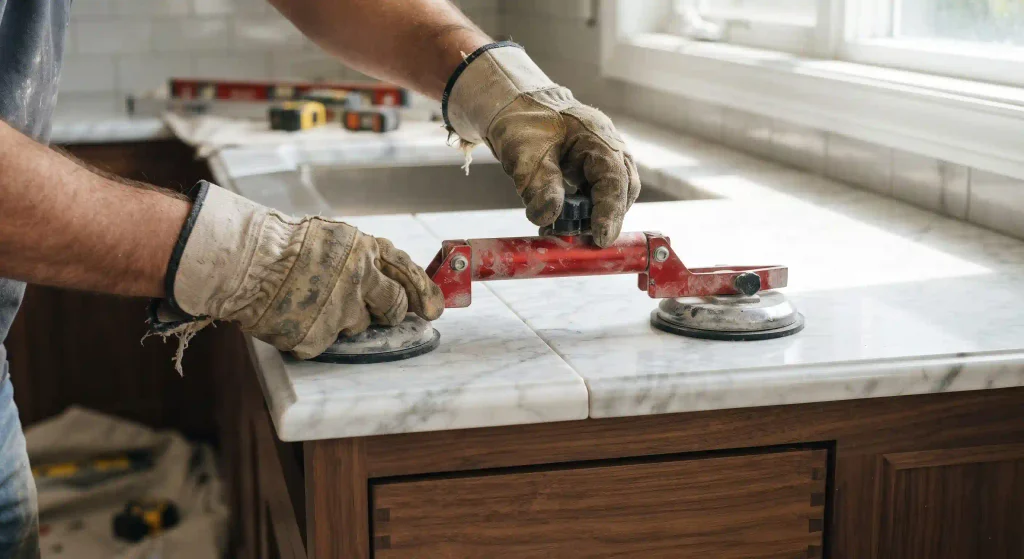
Seams are another detail to plan for. Quartz patterns are easier to match across seams, while granite seams need careful layout so the veining flows naturally. An experienced team handling your kitchen remodeling project will map out slab placement before any cutting begins, so every joint looks intentional and clean.
Cost Comparison
Pricing for quartz vs granite countertops overlaps more than most people expect. Entry level granite is often a bit cheaper than entry level quartz, but rare or exotic granite slabs can cost more than premium quartz. Designer quartz with realistic marble veining also sits at the higher end of the range.
As a rough guide, installed prices in the Los Angeles area commonly fall somewhere between $60 and $150 or more per square foot for either material. Your final number depends on slab grade, edge profile, thickness, cutouts for sinks and cooktops, and how complex your layout is. For a full picture of what goes into a project budget, our breakdown of kitchen remodel cost in Los Angeles walks through cabinets, labor, and finishes as well.
Keep long term costs in mind too. Granite needs sealing over the years, which adds a small ongoing expense. Quartz has almost no upkeep cost once it is installed.
Best Uses for Kitchens, Bathrooms, and Outdoor Spaces
Where the surface goes matters just as much as how it looks. Here is how quartz vs granite countertops perform in the spaces we remodel most often.
Kitchens: Both materials work well. Choose quartz if stain resistance and low upkeep matter most, especially in homes with young kids. Choose granite if you cook at high heat often or want a natural, unique slab.
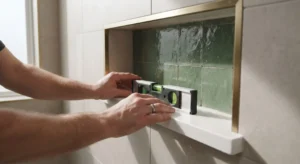
Bathrooms: Quartz is a favorite for vanities because it shrugs off makeup, toothpaste, and hair products without staining. Its consistent look also makes it easy to match shower curbs, benches, and niches. If you are planning bathroom remodeling, quartz is often the simpler pick.
Outdoor kitchens and sunny spaces: Granite is the better option here. Direct sunlight can cause some quartz to fade or yellow over time, and many manufacturers do not warranty standard quartz for outdoor use. Granite handles Southern California sun and temperature swings with ease.
Which Adds More Resale Value?
Both surfaces signal quality to buyers and usually help a home sell faster than laminate or tile. In many Los Angeles neighborhoods, buyers lean toward quartz in newer, modern homes because it reads as fresh and low maintenance. In homes with traditional or rustic design, a beautiful granite slab can feel more natural and authentic. In the end, choosing between quartz vs granite countertops for resale comes down to matching the surface to the overall style of the house.
Quick Checklist for Choosing
Still on the fence about quartz vs granite countertops? Use this simple checklist to narrow it down.
Pick quartz if you want:
- A consistent, uniform look or a marble style without the upkeep
- Zero sealing and very easy daily cleaning
- Maximum stain resistance for a busy family kitchen or bathroom vanity
Pick granite if you want:
- A completely unique, natural slab
- Higher heat tolerance for serious home cooking
- A surface that holds up well in outdoor kitchens and direct sun
Final Thoughts
There is no single winner in the quartz vs granite countertops debate. Quartz offers easy care, consistency, and strong stain resistance. Granite delivers natural beauty, heat tolerance, and outdoor durability. The right choice depends on how you live, how you cook, and the look you want for your home.
At Construction by Maya, we help homeowners across Calabasas, Thousand Oaks, Westlake Village, and greater Los Angeles choose materials that fit their style and budget, then install them with care and precision. Ready to choose the perfect countertop for your next project? Schedule a free consultation and learn more about how we can bring your dream space to life.
Frequently Asked Questions
Is quartz more expensive than granite?
Not always. Basic granite is often slightly cheaper, but prices overlap heavily, and exotic granite can cost more than many quartz lines.
Can you put hot pans on quartz?
It is best not to. High heat can scorch or discolor the resin. Always use a trivet or hot pad.
Does granite need to be sealed?
Yes. Most granite should be resealed every one to three years, depending on the stone and the sealer used.
Which is better for a kitchen remodel?
It depends on how you cook and the style you want. Many homeowners comparing quartz vs granite countertops choose quartz for low maintenance and granite for heat resistance and natural beauty.